
Most popular
Free
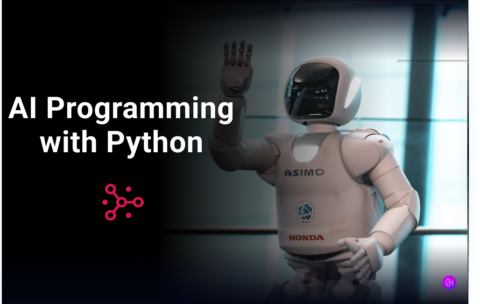
AI Programming with Python Bootcamp
What you'll learn
Learn the essential foundations of AI: the programming tools (Python, NumPy, PyTorch), the math (linear algebra), and the key techniques of neural networks (gradient descent and backpropagation).
Free
Free
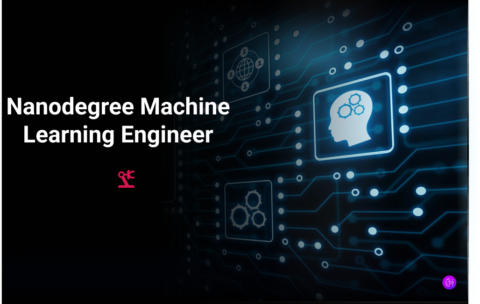
Machine Learning Engineering AWS Bootcamp
What you'll learn
Test Python code and build a Python package of their own.
Build predictive models using a variety of unsupervised and supervised machine learning techniques.
Use Amazon SageMaker to deploy machine learning models to production environments, such as a
web application or piece of hardware..
A/B test two different deployed models and evaluate their performance.
Utilize an API to deploy a model to a website such that it responds to user input, dynamically.
Update a deployed model, in response to changes in the underlying data source.
Free
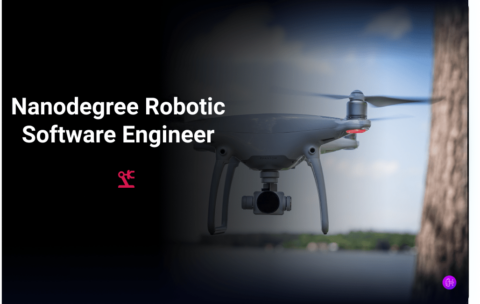
Robotics Software Engineer Bootcamp
What you'll learn
The Robotics Software Engineer Nanodegree program focuses on teaching the core robotics skills needed for a successful robotics software engineering career.
The program focuses on Localization, Mapping, SLAM, Path Planning, and Navigation. These are taught using C++ and the Robot Operating System (ROS) framework.
Free
Free
Free
Mastering Autonomous Mobile Robots with ROS 2 Bootcamp
What you'll learn
Dual-Language Mastery: All lessons are taught in both Python and C++. Choose your favorite or master both to become a versatile developer.
Autonomous Navigation: Dive deep into the math and logic behind Localization, Mapping, and SLAM (Simultaneous Localization and Mapping).
Zero Hardware Barriers: While we focus on real robots, you can complete the entire course using high-fidelity PC simulations. No expensive hardware is required to start!
Free
Trending
Free
Mastering Autonomous Mobile Robots with ROS 2 Bootcamp
What you'll learn
Dual-Language Mastery: All lessons are taught in both Python and C++. Choose your favorite or master both to become a versatile developer.
Autonomous Navigation: Dive deep into the math and logic behind Localization, Mapping, and SLAM (Simultaneous Localization and Mapping).
Zero Hardware Barriers: While we focus on real robots, you can complete the entire course using high-fidelity PC simulations. No expensive hardware is required to start!
Free
Machine Learning Engineering AWS Bootcamp
What you'll learn
Test Python code and build a Python package of their own.
Build predictive models using a variety of unsupervised and supervised machine learning techniques.
Use Amazon SageMaker to deploy machine learning models to production environments, such as a
web application or piece of hardware..
A/B test two different deployed models and evaluate their performance.
Utilize an API to deploy a model to a website such that it responds to user input, dynamically.
Update a deployed model, in response to changes in the underlying data source.
Free
Robotics Software Engineer Bootcamp
What you'll learn
The Robotics Software Engineer Nanodegree program focuses on teaching the core robotics skills needed for a successful robotics software engineering career.
The program focuses on Localization, Mapping, SLAM, Path Planning, and Navigation. These are taught using C++ and the Robot Operating System (ROS) framework.
Free
AI Programming with Python Bootcamp
What you'll learn
Learn the essential foundations of AI: the programming tools (Python, NumPy, PyTorch), the math (linear algebra), and the key techniques of neural networks (gradient descent and backpropagation).
Free
Free
Free
Free
Popular Instructors

All School of Artificial Intelligence Courses
Free
Machine Learning Engineering AWS Bootcamp
Learn more about this Bootcamp Strengthen your Machine Learning skills …
What you'll learn
Test Python code and build a Python package of their own.
Build predictive models using a variety of unsupervised and supervised machine learning techniques.
Use Amazon SageMaker to deploy machine learning models to production environments, such as a
web application or piece of hardware..
A/B test two different deployed models and evaluate their performance.
Utilize an API to deploy a model to a website such that it responds to user input, dynamically.
Update a deployed model, in response to changes in the underlying data source.
- 1
- 2
